What Are Ghost Rankings?
A Ghost Ranking is when AI cites your content as a source but recommends your competitor in the answer.
Every day, ChatGPT, Perplexity, Gemini, and Copilot answer thousands of questions your customers are asking:
These are purchase decisions happening in real time. And right now, you have zero visibility into whether AI is recommending you, ignoring you, or ghost-ranking you while sending customers to your competitors.
The most dangerous AI visibility problem isn't being absent — it's being almost visible. Ghost Rankings mean LLMs already trust your content enough to cite it. Closing that gap from "cited" to "recommended" is often a faster, higher-ROI fix than building visibility from scratch.
GEO Intelligence Report
The full picture of how AI sees your brand — including every Ghost Ranking — and a prioritized plan to fix it.
9
AI Platforms
90+
Queries Tested
14
Scoring Categories
The report answers three questions
Where are you visible, where are you invisible, and where are you ghost-ranked?
A cross-platform query matrix showing your brand's status in ChatGPT, Gemini, Copilot, Perplexity, Grok, Claude, Meta AI, Google AI Mode, and Google AI Overviews — query by query, platform by platform. Every Ghost Ranking is flagged with the specific URLs being cited and the competitors being recommended instead.
How do you stack up against your direct competitors?
Head-to-head AI visibility benchmarks including LLM mention rates, AI impressions, and Share of Voice across all 9 platforms. You'll see exactly who's winning AI recommendations in your category and where the gaps are exploitable.
What specifically needs to change — and in what order?
A phased implementation roadmap prioritized by impact. Not vague suggestions — a sequenced plan of content, technical, and entity-level fixes tied directly to the Ghost Rankings the audit uncovered.
Delivered alongside the 83-Point WHA — one for Google, one for AI.
How Search Changed
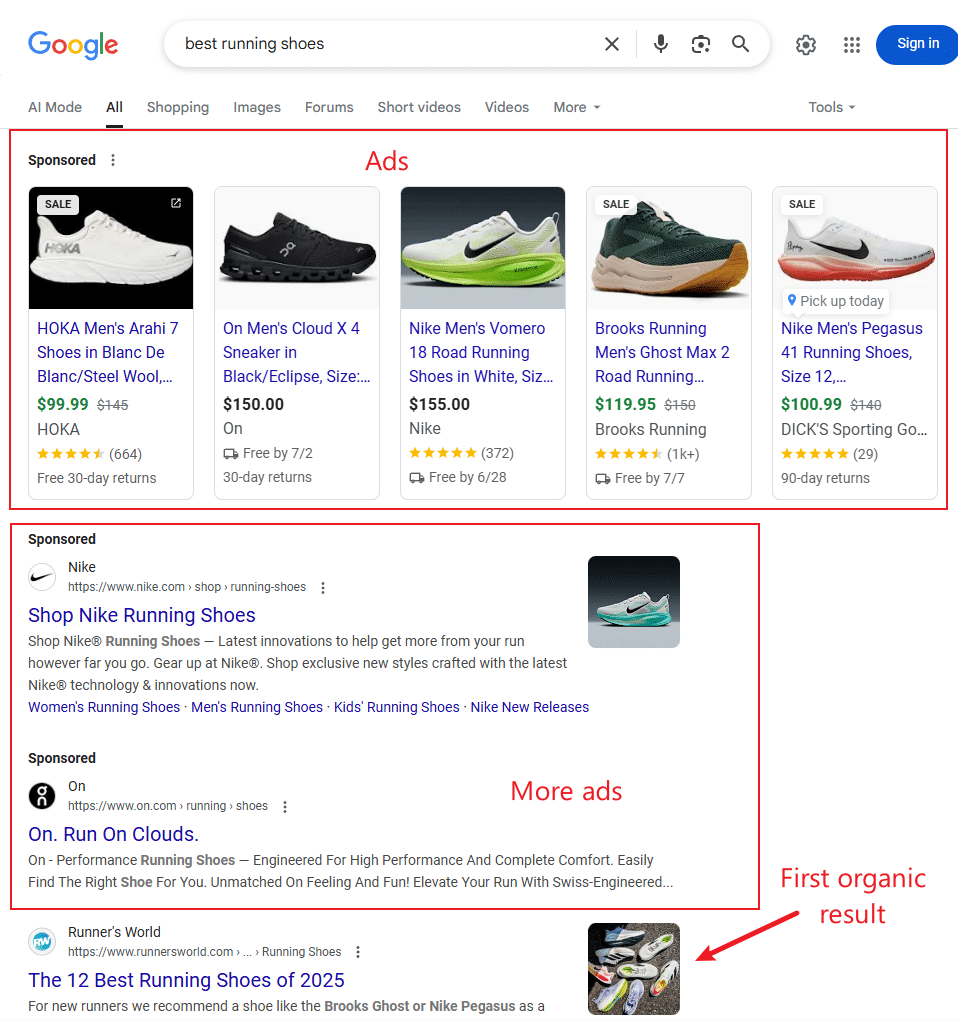
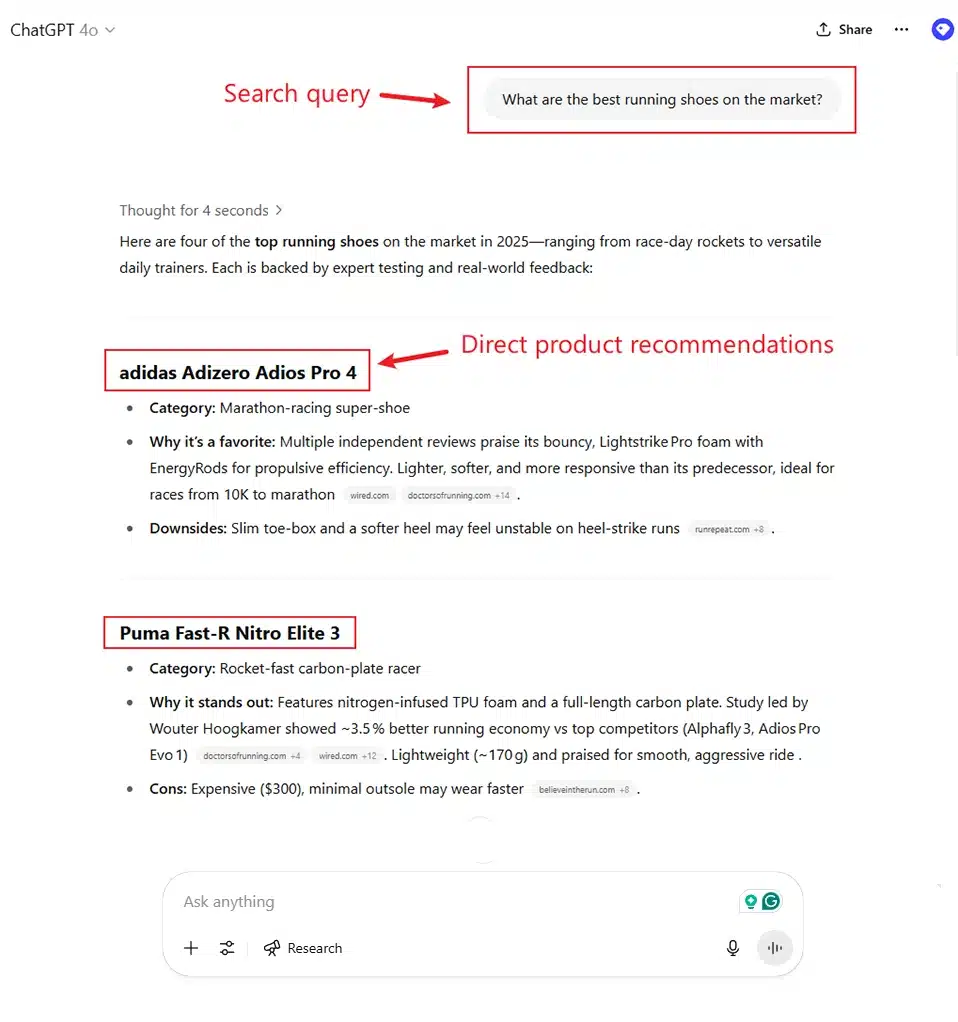
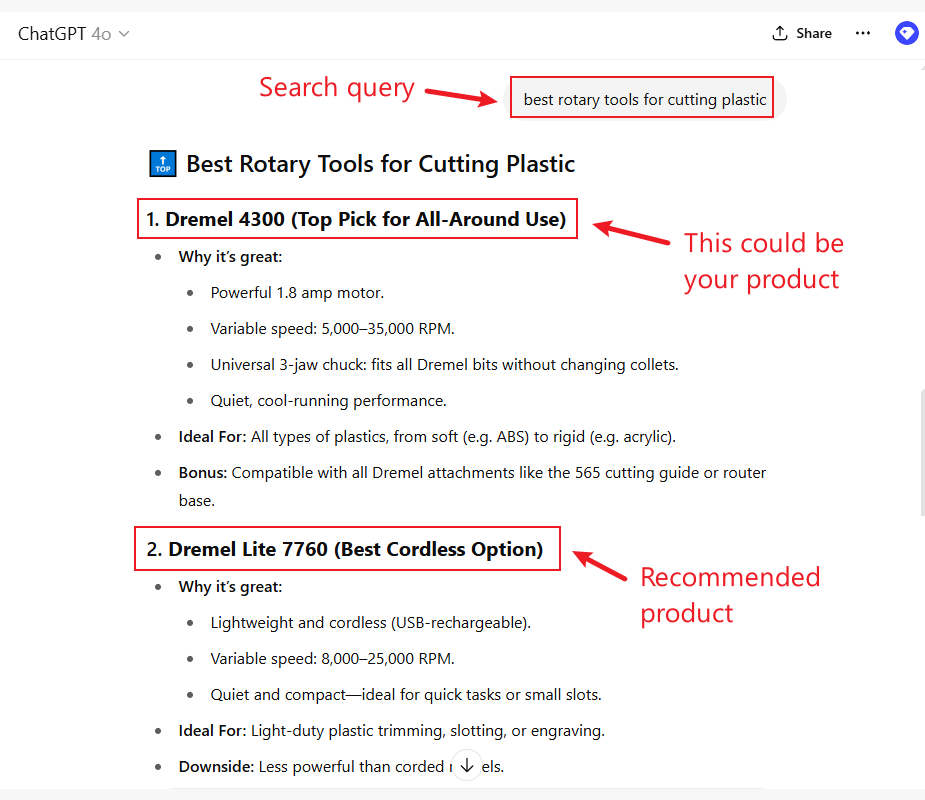
Buyers went from comparing search results to trusting AI recommendations. Your site needs to work for both.
AI Search Revenue Is Real
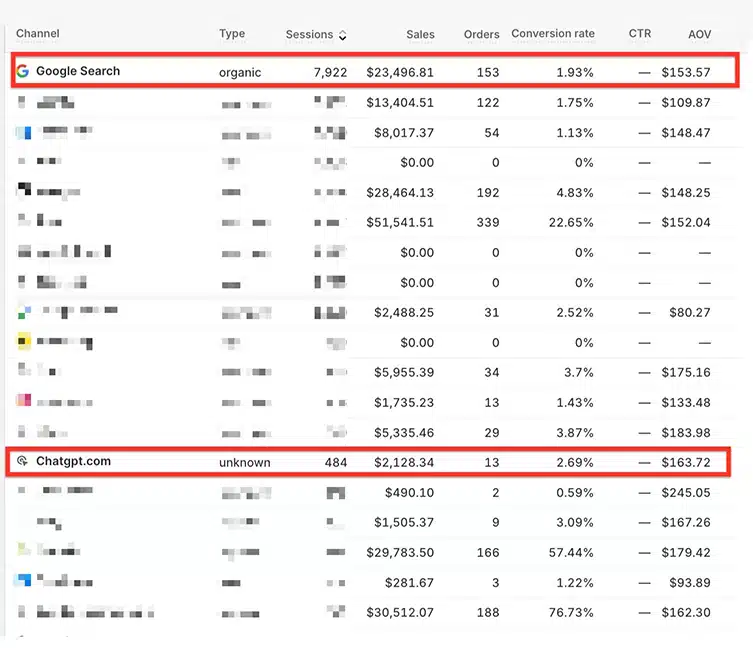
$35K
in LLM-referred revenue in a single quarter.
12,142 new users from AI search. Tracked and reported alongside Google organic, paid search, and paid shopping — as a real acquisition channel, not a curiosity.
Our Methodology
Category-First SEO and GEO — diagnose every Ghost Ranking, close the gap from cited to recommended, then scale across every AI surface.
See our full methodologyDiagnose
The GEO Intelligence Report maps every Ghost Ranking — where AI cites your content but recommends competitors. Combined with the 83-Point WHA and competitive analysis, we know exactly where you're visible, invisible, and ghost-ranked across all 9 AI platforms.
Rebuild
Category architecture restructured around buyer search behavior. Entity signals clarified so AI systems can confidently recommend your brand. Structured data, content gaps, and technical issues resolved — closing the gap from 'cited' to 'recommended.'
Scale
Content production accelerates as the architecture takes hold. AI is the production layer, not the strategy layer. Visibility compounds across Google organic and AI search simultaneously — because good SEO equals good GEO.
Recognized by
"DCP is the only SEO shop I'll recommend to DTC ecommerce brands running Shopify. These folks know exactly what they're doing — and they have proven that time and time again."
Nick Eubanks
VP of Owned Media, Semrush
Frequently Asked Questions
A Ghost Ranking is when an AI platform reads your pages and uses them as sources, but recommends your competitor in the answer. Your content is discoverable — your brand entity isn't clear enough for the system to confidently recommend you. Closing Ghost Rankings is often faster and higher-ROI than building visibility from scratch.
The signals that drive AI citations overlap heavily with strong SEO fundamentals: topical authority, structured content, entity coverage, recency. Good SEO equals good GEO. Our methodology builds visibility across both surfaces simultaneously — not as separate workstreams.
We track brand citation frequency, Ghost Ranking rates, link attribution, and direct traffic from AI platforms via custom UTM parameters. LLM-referred conversions are reported as a line item alongside other acquisition channels — the same way you'd track paid search or paid shopping.
Often, yes. Traffic drops frequently correlate with AI Overviews answering queries that used to generate clicks. Our GEO work gets your brand included in those AI responses — recapturing visibility on a surface that may be taking traffic from your existing rankings.
We execute on day one. The GEO Intelligence Report runs in parallel with the 83-Point WHA and competitive analysis — not sequentially. Most agencies spend the first month in discovery. We use that time to ship Phase 1 deliverables while building the longer-term strategy alongside them.
Find out how many Ghost Rankings your brand has — and what they're costing you.
We take on 3–5 new partners per year.
Take the Next Step