Luxury Brand, Broken Data, Invisible Products
A luxury sleepwear brand came to DCP with over 1,500 SKUs — and almost none of them were visible in Google Shopping results.
The underlying issue wasn't creative or strategic. It was structural. The brand's Shopify store was missing critical product attributes — size, color, material, and gender data that Google's Merchant Center requires to surface products in Shopping results.
- Product titles were inconsistent and missing key identifiers
- Metafields for size, color, and material weren't populated in Shopify
- Google Merchant Center was rejecting or suppressing listings due to incomplete data
- Competitors with cleaner feeds were capturing the Shopping real estate
Without clean, structured data flowing into the product feed, even well-made products were invisible to the shoppers actively searching for them.
Strategic Data Processing to Extract Hidden Attributes
Rather than manually updating 1,500+ product records inside Shopify, DCP built a data processing layer using DataFeedWatch — turning messy source data into structured, Google-ready feeds.
The team reverse-engineered the existing product data to find where attributes were hiding — embedded in product titles, variant names, and description fields — then used conditional logic and reference tables to extract and standardize them.
- Reference tables mapped existing product names to standardized color, material, and size values
- Conditional rules extracted gender and category data from title patterns and variant structures
- Title reconstruction assembled clean, keyword-rich product titles from the newly structured attributes
- Feed optimization ensured every required Merchant Center field was populated and correctly formatted
The result was a clean product feed that gave Google everything it needed — without requiring the client to overhaul their Shopify data. The fix lived in the feed layer, not the storefront.
Revenue Surged 790% on Product Pages
Within months of launching the optimized feed, Google Shopping performance transformed across every key metric.
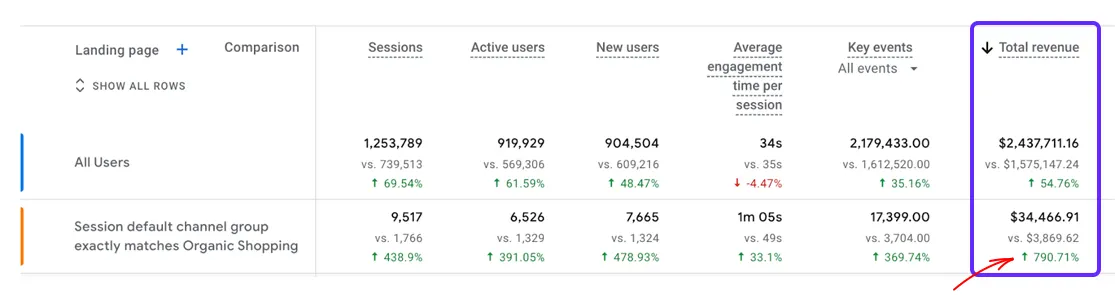
The feed optimization didn't just improve impressions — it drove qualified traffic that converted. Products that were previously invisible in Shopping results were now ranking and generating direct revenue.
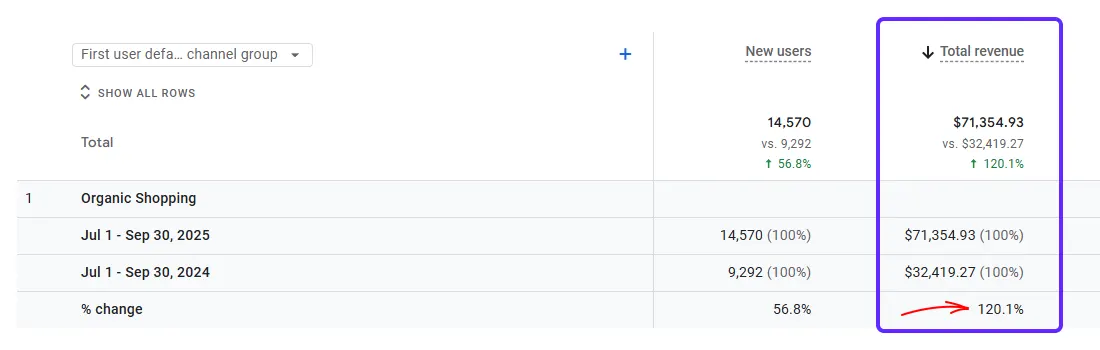
120% Year-Over-Year Revenue Increase
The impact extended beyond individual product pages. Overall organic shopping revenue grew 120% year over year, driven by the compounding effect of cleaner data across the entire catalog.
Google Shopping clicks increased 138% year over year as the optimized product feed surfaced more products in Shopping results — reaching shoppers who were actively searching for the brand's categories.
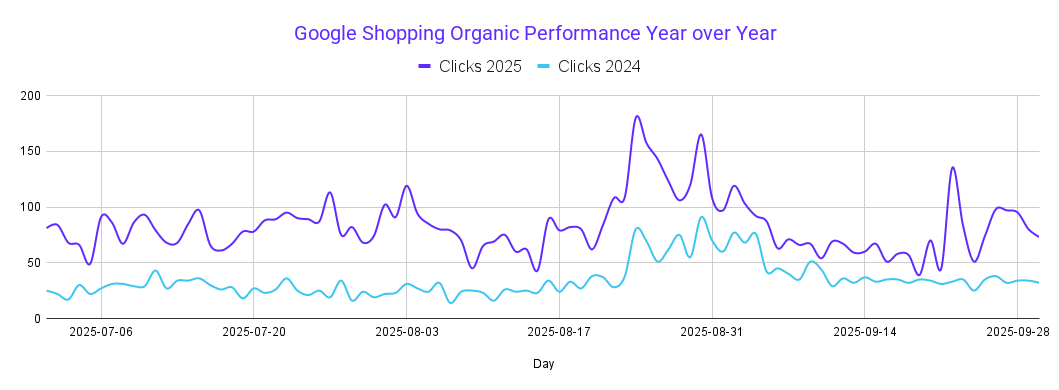
Because the fix was structural rather than promotional, the gains compounded over time. Each new product added to the catalog automatically inherited the clean data processing rules, making the system scalable without ongoing manual effort.
Keep Reading
Feed Optimization That Converts: How 130+ Product Updates Doubled Google Shopping Revenue
Scaling Sleepwear: How Collection Expansion Fueled a 103% Organic Revenue Surge
How Programmatic SEO Boosted Performance for Size-Specific Product Pages
Ready to Be the Next Success Story?
We work with 15 ecommerce brands at a time. Let's find out what category-first SEO can do for yours.
Start a Conversation digitalcommerce.com/contact