
Table of Contents
TL;DR
Category pages are the most important pages on your ecommerce site. They target the non-branded commercial queries (“women’s pajama sets,” “outdoor security cameras,” “men’s dress shirts”) that bring in buyers who’ve never heard of your brand.
Product pages rank for specific items. Category pages rank for how buyers search. If your store doesn’t have collection pages matching the way buyers search your category, you’re handing that traffic to competitors who do.
What we’ve seen: Printfresh grew organic search revenue 24.2% YoY with collection pages driving a 26.9% organic revenue increase. A different partner saw +103% organic revenue in one quarter from collection expansion alone. Not by optimizing what already existed, but by building the category pages that were missing.
Your Category Pages Determine Whether You Rank Beyond Your Brand Name
Most ecommerce stores rank for their brand name. If someone searches “Printfresh pajamas,” Printfresh should show up. That’s expected. The question is what happens when someone searches “women’s pajama sets” or “cotton nightgowns” without a brand name attached.
Those non-branded category searches are where new customer acquisition happens. And the pages that rank for them aren’t product pages. They’re category pages.
Consider the difference:
- Product page: “Printfresh Garden District Blouse”
- Category page: “women’s blouses”
The search volume difference between those two queries is often an order of magnitude. And the buyer intent behind category searches is commercial: they’re browsing, comparing, ready to buy from whoever shows up.
This is what we mean by Category-First SEO. Structure your site around how buyers search the category, not around your product catalog. The catalog is what you sell. The category structure is how buyers find you.
Missing Collection Pages Are the Most Common Structural Gap We Find
When we audit ecommerce sites, the single most common finding isn’t broken technical SEO or thin content. It’s missing collection pages. The products exist. The search demand exists. But there’s no landing page connecting the two.
We saw this with a global smart home brand. They sold outdoor security cameras, video doorbells, smart plugs. But they didn’t have collection pages for those category searches. Someone searching “outdoor security cameras” had no entry point into their site.
Our keyword mapping audit identified 41 high-intent collection opportunities that didn’t exist. We built them, integrated them into site navigation, and created clear pathways from category search to collection page to product page to purchase.
The result in five months:
- +55% organic sessions to collection pages
- 3,687 new keyword rankings in a single quarter
- +190% organic visibility across the catalog
- +335% non-branded search traffic, reaching entirely new audiences who weren’t searching by name
Non-branded queries now account for 79% of all their search traffic. That’s new customer acquisition at scale, driven by category pages that didn’t exist six months prior. See how SEO collection expansion drove a 55% surge in organic traffic →
Category Hierarchy Should Mirror How Buyers Search: Printfresh
The way you categorize products internally is rarely how buyers search for them. Your merchandising team might organize by supplier, season, or SKU type. Buyers search by use case, attribute, and occasion.
Printfresh, a premium sleepwear brand and DCP partner, had products for every major category: pajamas, robes, nightgowns, loungewear. But the site structure didn’t match how customers searched. Core pajama-related searches had no matching collection pages. Seasonal and high-intent queries were going entirely to competitors.
The brand was missing approximately 73% of category-level searches for their own product types.
We expanded and optimized key collections to match actual search behavior, not internal merchandising logic. Every major category got an optimized collection page that could rank and convert.
The initial collection expansion delivered within one quarter:
- +103% organic search revenue
- 6,008 new keyword rankings
- Pajama Sets organic revenue share jumped from 14% to 27%
- Robes saw a 64% organic revenue increase
- Dresses organic revenue surged 170%
But that was just the starting point. Ongoing category optimization through 2025 kept building on those gains. See how collection expansion fueled a 103% organic revenue surge →
Q4 2025 results from sustained category-first optimization:
- +24.2% YoY organic search revenue growth
- +26.9% organic revenue from collection pages alone
- +68.2% organic search and shopping revenue from product pages
- 565,000 new organic search users in a single quarter
- 54% increase in non-branded search clicks QoQ, 27% YoY
- 1,190 pajama-related keywords improved, including “pajamas women” (position 8), “cute pajamas” (position 2), and “best pajamas” (position 3)
- 2,741 net-new keyword rankings added in Q4 with immediate top-10 placements
Collection pages now drive the majority of Printfresh’s organic revenue. And the opportunity keeps growing: 3,036 keywords currently sit in positions 4 through 20 across their collection pages, representing over 2 million monthly searches in cumulative volume. These are rankings that already exist. Pushing them from page 2 into the top 3 is the fastest path to incremental revenue without creating a single new page.
The other signal worth noting: LLM-attributed traffic to Printfresh grew every quarter in 2025, with Q4 showing meaningful buyer intent from AI-powered discovery channels. Category pages with clear structure and strong topical signals are the pages that AI models can parse, summarize, and recommend. The same structure that ranks in Google is what gets cited in ChatGPT and Perplexity. This is what generative engine optimization looks like in practice: one methodology, every search surface. Knowing which category pages actually earn that citation—and which get cited while a competitor wins the recommendation—is what Constraint Mapping for ecommerce measures.
What Belongs on a Category Page (and What Doesn’t)
A category page isn’t a blog post. It’s not a place for 2,000 words of SEO copy above the product grid. It’s a commercial page. Buyers land here to browse, filter, and buy.
But a category page that’s nothing but a product grid with no text gives search engines nothing to rank for. The balance is:
Above the fold: Products first. The product grid is why the buyer is here. Don’t push it below a wall of text. A short category introduction (2-3 sentences) and the product grid should be the first thing they see.
Below the grid: Content that earns rankings. This is where you add the descriptive content, FAQs, and buying guidance that search engines need to understand what the page is about and rank it for category queries.
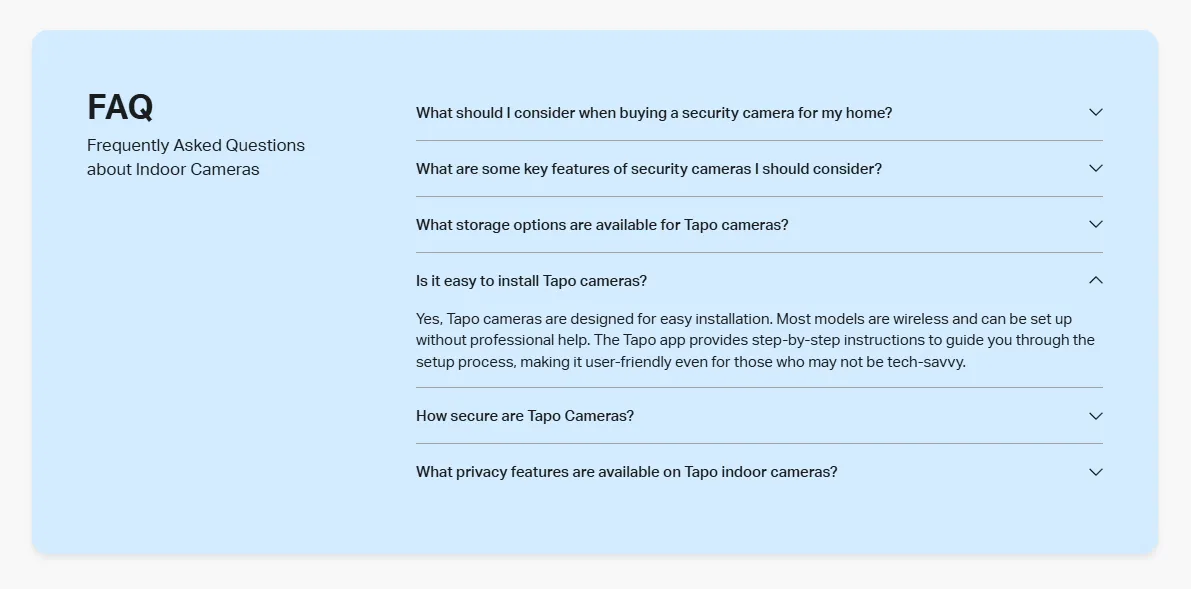 TP-Link’s category pages include FAQs below the product grid, answering buyer questions without pushing products below the fold.
Filters and sorting: Essential, but manage the technical SEO consequences. Every filter combination generates a crawlable URL. Without proper canonical tags and crawl directives, your 50 category pages can generate 50,000 filtered URLs that waste crawl budget and dilute authority. Use canonical tags to point filtered pages back to the main category. Block infinite parameter combinations in robots.txt. Index only the filter combinations with real search demand.
Internal links to guides and related categories. A category page for dress shirts should link to your dress shirt buying guide, your formalwear category, and related collections like ties or cufflinks.
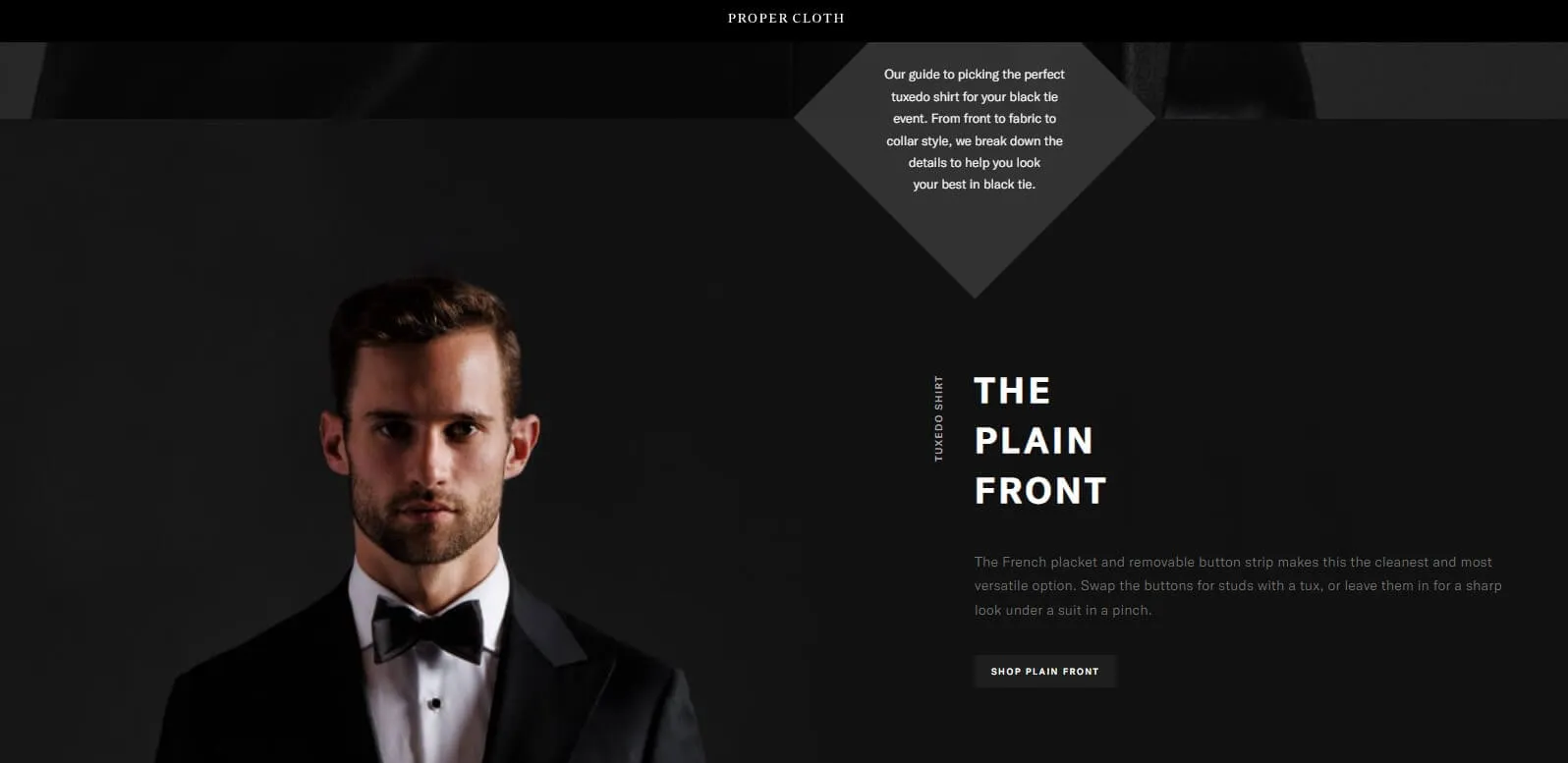 Proper Cloth links from their formalwear collection to their Tuxedo Shirt Guide, connecting commercial intent to educational content.
The Internal Linking Architecture That Makes Category Pages Rank
Category pages don’t rank in isolation. They rank because the site’s internal linking architecture concentrates authority on them.
The structure that works:
Homepage → Top categories → Subcategories → Products. Each level links down to the next and back up to the parent. This creates a clear authority flow and tells search engines exactly how your ecommerce site structure is organized.
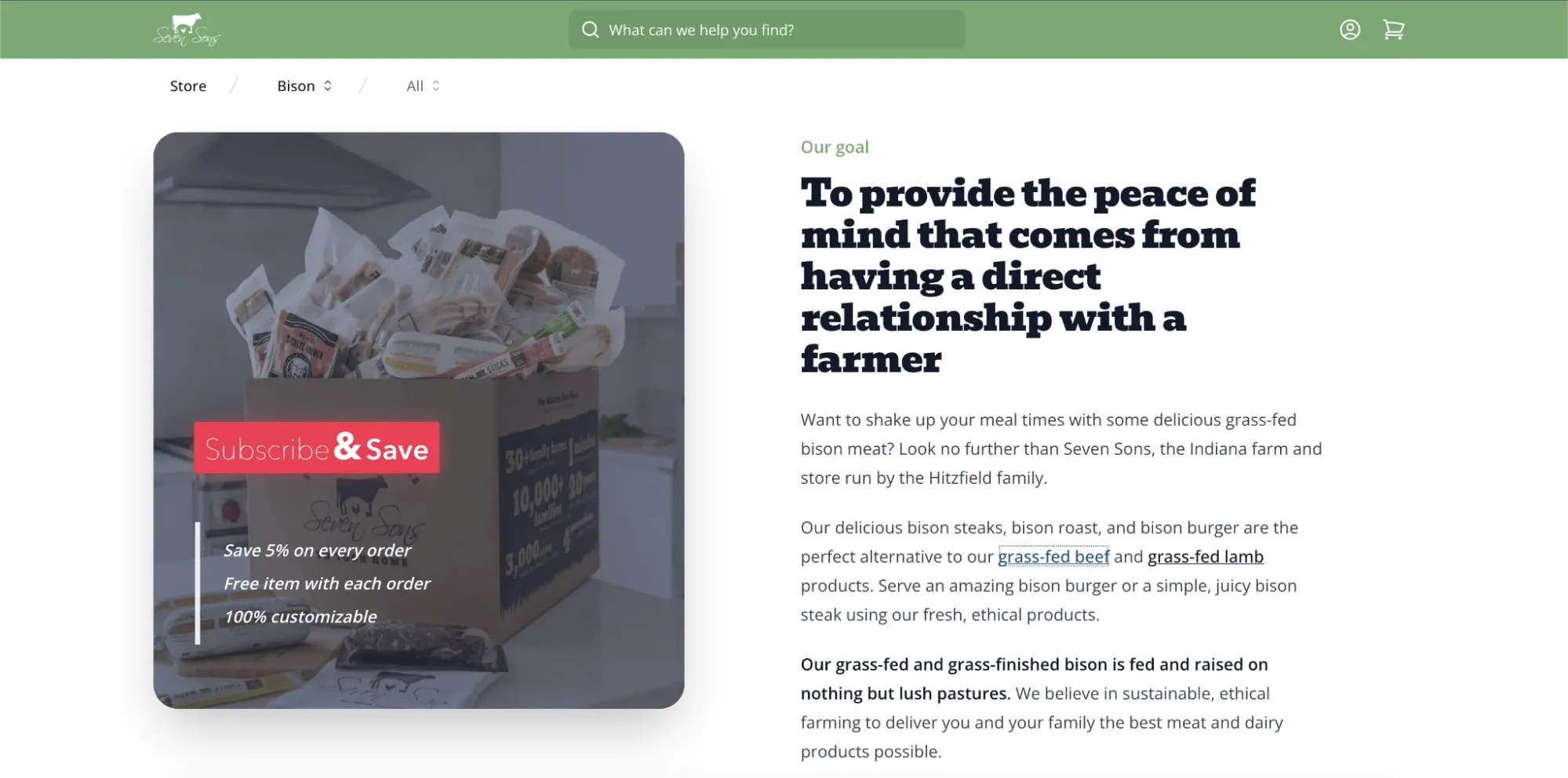 For Seven Sons, we linked across product categories (grass-fed beef and lamb from the Bison collection) to improve cross-category discovery and distribute authority.
Breadcrumbs reinforce hierarchy. They’re not just a UX convenience. They’re structured internal links that signal parent-child relationships to search engines.
Cross-category links connect related collections. A buyer browsing sweaters might also want jeans or belts. Cross-linking between related categories creates lateral authority paths and keeps buyers engaged longer. But keep the links relevant. Random cross-links dilute the topical signal.
Blog content feeds authority to category pages. A buying guide ranking for “how to choose running shoes” that links to your running shoes collection transfers earned authority from an informational page to a commercial one. This is how content marketing directly drives organic revenue. Not by ranking the blog post itself, but by funding the category page’s ability to rank for commercial queries.
On-Page Optimization That Earns Clicks From the SERP
Getting a category page to rank is one problem. Getting the click is another. With AI Overviews, featured snippets, and rich results occupying more SERP space, your listing needs strong on-page SEO to stand out.
Title tags should target the commercial query directly. “Men’s Dress Shirts | Shop Premium Formal Shirts” beats “Shirts - Category - MyStore.” Include the primary keyword and a reason to click.
Meta descriptions should sell, not describe. “Free shipping on 200+ styles. Custom fit available.” beats “Browse our selection of men’s dress shirts.” The meta description is ad copy. Treat it that way.
Schema markup earns rich results. Product schema with aggregate ratings, price ranges, and availability shows up as rich snippets in search results. A listing with star ratings and pricing gets more clicks than a plain blue link.
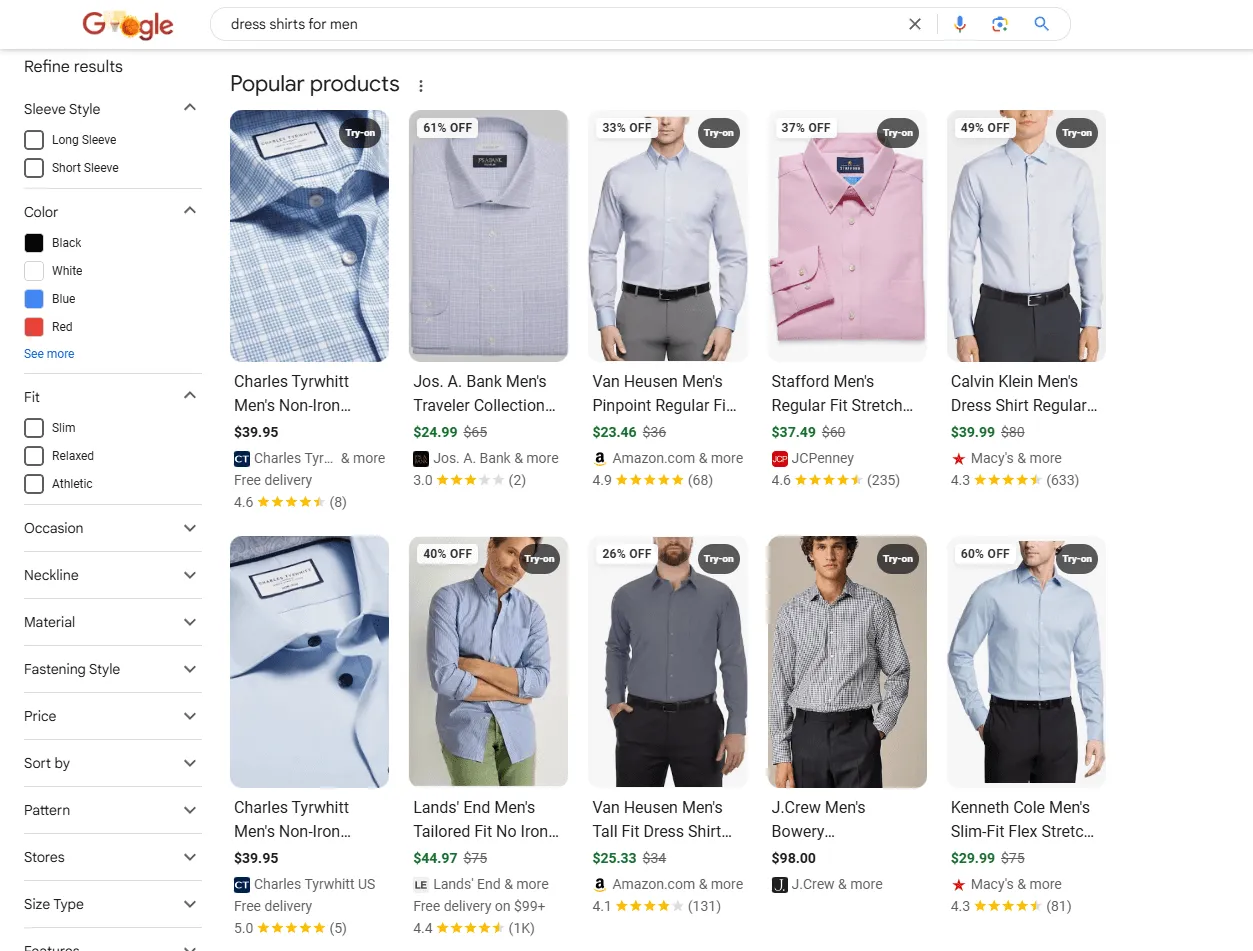 Rich results with star ratings and product counts make category listings stand out in a crowded SERP.
Clean URLs signal relevance. /shop/shirts/dress-shirts/ tells both users and search engines exactly what the page is about. /shop/cat25/?sort=price does not. Your URL structure should mirror your category hierarchy.
Frequently Asked Questions
What is taxonomy in ecommerce SEO?
Taxonomy is the classification system that organizes your products into categories, subcategories, and collections. It determines how a shopper navigates from “Women’s Clothing” to “Dresses” to “Maxi Dresses”—and it’s how search engines understand the relationships between your pages. A well-structured taxonomy improves crawlability, distributes page authority across your category tree, and creates clear navigation paths for both users and search engines. When your taxonomy mirrors how customers actually search and shop, your category pages naturally align with the commercial queries that drive revenue.
Category Pages Are the Lever. Pull It.
If your organic traffic is flat, your non-branded search visibility is weak, or you’re spending heavily on paid ads to drive category-level traffic, the fix is almost always structural.
You either don’t have the category pages that match how buyers search, or the ones you have aren’t set up to rank. Both are fixable.
The DTC and ecommerce brands we partner with typically see results within one quarter of collection expansion. Not because category page SEO is magic, but because the demand already exists and the products already exist. The only thing missing is the page that connects the two.
If you want to see what’s missing in your category structure, check out our Ecommerce SEO Services. Category architecture is where every engagement starts.